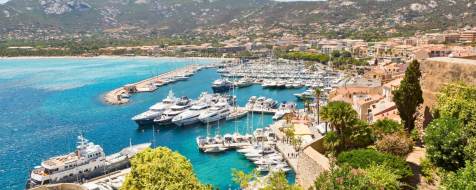
A crewed yacht charter in Corsica usually starts around €30,000 per week for a smaller crewed yacht and can run well beyond €150,000 per week for a larger motor yacht or superyacht. The real budget is higher than the advertised weekly rate because French VAT, APA, and crew gratuity are normally added on top.
For most clients, we would plan the full cash budget at roughly 55% to 75% above the base charter fee. That sounds like a big jump, but it is the honest way to budget Corsica. The base rate is only the yacht and crew. The rest covers tax, fuel, food, drinks, berthing, and the customary crew tip.
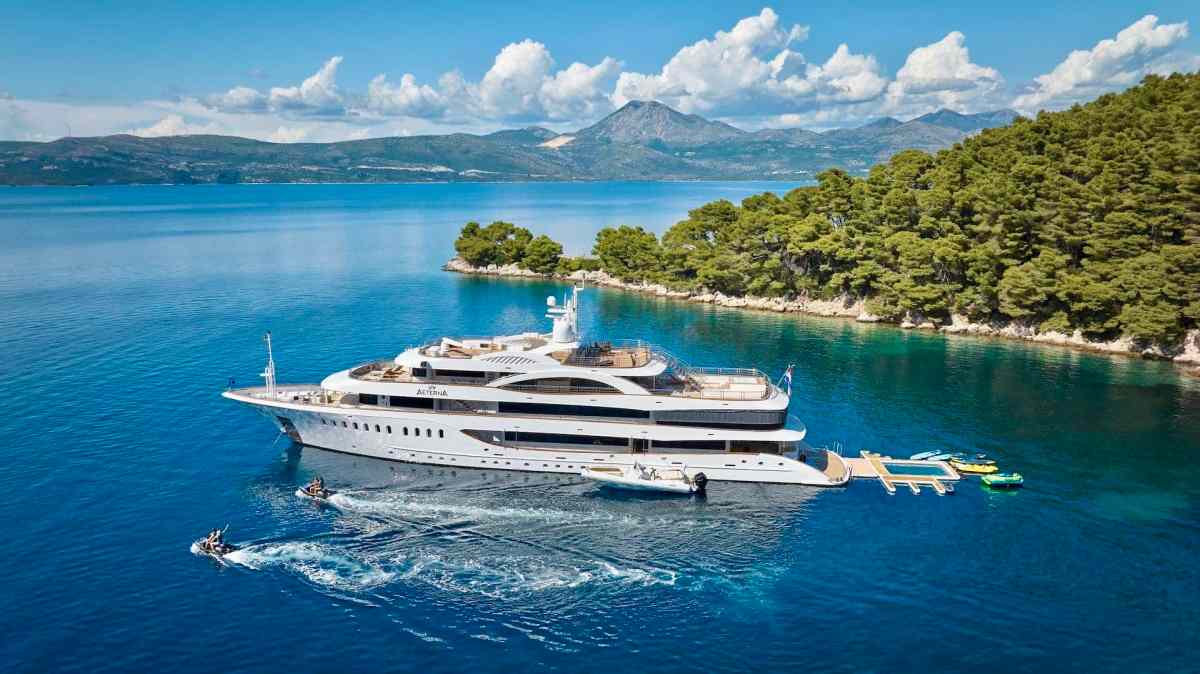
Quick answer: Corsica yacht charter cost ranges
These are realistic weekly base-rate ranges before VAT, APA, and gratuity:
- Smaller crewed yachts: around €30,000 to €45,000 per week
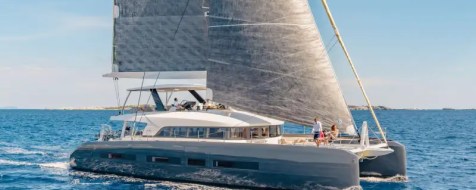
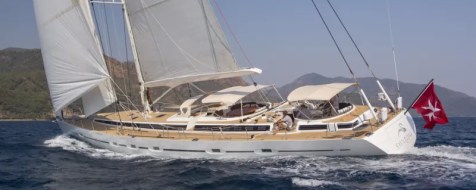
- Crewed catamarans and sailing yachts: around €35,000 to €90,000 per week, with high-end sailing yachts above that
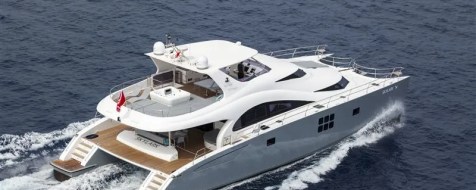
- Quality motor yachts: around €45,000 to €150,000 per week
- Larger luxury motor yachts and superyachts: €150,000 to €500,000+ per week
If a client asks us what budget starts to feel comfortable for Corsica, we usually say this: budget at least €50,000 to €70,000 all-in for a smaller quality week, and more like €120,000+ all-in for a strong motor yacht week.
There are cheaper boats in the wider market, but they are often not the trips our clients are actually asking for. Once you want a proper crewed yacht, good service, a comfortable route, and the option to include Bonifacio, Porto-Vecchio, the Lavezzi Islands, or northern Sardinia, the budget needs to be realistic.
What the advertised weekly rate includes
The weekly charter fee usually includes the yacht, its crew, standard onboard equipment, and the right to use the yacht for the agreed charter period. On a fully crewed yacht, that means captain, chef or cook where applicable, stewardess or deck crew depending on size, and the yacht’s normal setup.
It does not usually include the full cost of running the charter. This is where many first-time clients get surprised. In the Mediterranean, and especially on motor yachts, the advertised rate is the starting point rather than the final number.
When we build a Corsica shortlist, we always look at the base rate and the likely operating profile together. A yacht with a slightly lower weekly rate can become less attractive if the route needs more fuel, if marina plans are expensive, or if the yacht is not efficient for the itinerary.
What is added on top?
1. French VAT
Corsica is part of France, so the normal planning assumption is 20% VAT on the base charter fee. Exact VAT treatment can depend on the itinerary, embarkation point, and contract details, but for a Corsica charter you should not budget as if VAT will disappear.
On a €80,000 charter fee, 20% VAT is €16,000. That is why we talk about the full budget early. A client who is comfortable with an €80,000 yacht may not be comfortable when the real charter budget moves closer to €125,000 to €140,000.
2. APA
APA stands for Advance Provisioning Allowance. It is the expense fund the captain uses for fuel, food, drinks, marina fees, local charges, special requests, and other running costs during the charter.
In Corsica, we usually expect APA to sit around 25% to 40% of the base charter fee. Sailing yachts and catamarans can sit lower when the itinerary is gentle. Motor yachts can sit higher because fuel use matters more, especially if the route includes longer runs or a Corsica and Sardinia combination.
APA is not a broker fee or a hidden markup. It is reconciled at the end of the charter. If you spend less, the balance is returned. If the charter spends more, the captain will request a top-up. The practical point is simple: you still need to fund it before the charter starts.
3. Crew gratuity
Crew gratuity is discretionary, but in the Mediterranean most clients budget around 10% to 15% of the base charter fee when the service is good. Some charter guidance references a wider 5% to 15% range, but we find 10% to 15% is the cleaner expectation for a well-run luxury charter.
The important detail is that gratuity is normally calculated on the base charter fee, not on VAT and not on APA.
Example full budgets
Here is how the numbers can look once the extras are included. These are planning examples, not quotes for a specific yacht.
- €30,000 base charter fee: roughly €46,500 to €52,500 total planning budget
- €50,000 base charter fee: roughly €77,500 to €87,500 total planning budget
- €80,000 base charter fee: roughly €124,000 to €140,000 total planning budget
- €150,000 base charter fee: roughly €232,500 to €262,500 total planning budget
These examples use 20% VAT, 25% to 40% APA, and 10% to 15% gratuity. Your final spend can be lower if unused APA is returned, or higher if the route is fuel-heavy, marina-heavy, or built around very specific food, wine, and event requests.
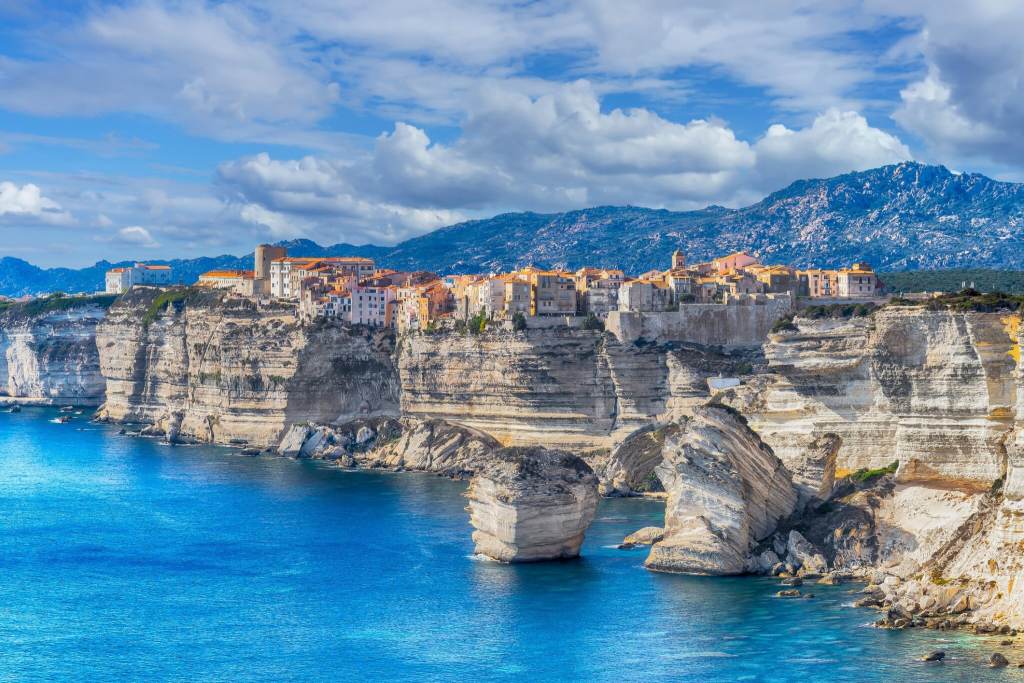
What changes the price most?
Yacht type
Motor yachts usually cost more to charter and more to run than catamarans or sailing yachts. The tradeoff is range, speed, service level, and a more polished style of charter. In Corsica, that tradeoff often makes sense because the destination rewards movement.
We often recommend motor yachts in Corsica when the client wants Bonifacio, Porto-Vecchio, the Lavezzi Islands, and maybe northern Sardinia in one week. If the trip is slower and mostly South Corsica, a catamaran can be better value.
Season
July and August are the most expensive and competitive months. The best yachts book early, marina pressure is higher, and there is less room to negotiate. June and September can still feel like a proper Mediterranean charter, but with better availability and often better value.
If the client has flexibility, we would usually check June and September before forcing a peak August week. The yacht choice is often better, and the overall charter can feel less crowded.
Route
A simple South Corsica week costs less to run than an ambitious Corsica and Sardinia itinerary. The difference is not only fuel. It is also marina choices, timing, repositioning, and how much the yacht needs to move to make the week feel effortless.
This is why we like to talk about route before we talk about price too narrowly. A yacht that looks expensive can be the better fit if it protects the itinerary. A cheaper yacht can be the wrong choice if the route becomes stressful or too slow.
Food, wine, marina plans, and guest style
APA changes with how you use the yacht. A quiet anchorage week with lunches on board is different from a week with big marina nights, long fuel-burning passages, premium wines, and several restaurant or beach-club plans. We do not treat that as a problem. We just budget it clearly before the charter starts.
How much should you spend for a good Corsica charter?
If you want a comfortable, well-crewed Corsica charter without chasing the lowest possible option, we would usually start the conversation around these all-in planning levels:
- €50,000 to €75,000 all-in: smaller crewed yachts, selected catamarans, or value-focused weeks with a tighter route
- €90,000 to €150,000 all-in: stronger catamarans, smaller motor yachts, and more comfortable South Corsica or Bonifacio-focused trips
- €150,000 to €300,000 all-in: serious motor yacht territory, better crew setups, stronger routes, and a more polished luxury feel
- €300,000+ all-in: larger superyachts, top crew, more water toys, more volume, and a more complete high-end charter experience
The sweet spot depends on your group. Families often care about cabin layout, swim access, and deck space. Couples and adult groups often care more about speed, crew style, dining, and whether the yacht can move elegantly between Corsica and Sardinia.
Our recommendation
Do not choose a Corsica yacht by base price alone. Choose it by real weekly budget, route fit, yacht type, and crew quality. That is the only way the price comparison becomes useful.
If your budget is under €75,000 all-in, we would keep the route simple and look carefully at catamarans or smaller crewed yachts. If your budget is €120,000+ all-in, we can usually start looking at more compelling motor yacht options. If your brief includes Corsica and Sardinia with a polished service level, we would usually build the shortlist around motor yachts first.
Send us your preferred dates, guest count, and rough budget, and we will show you the yachts where the full cost actually makes sense for the trip you want.








 iMessage
 WhatsApp